

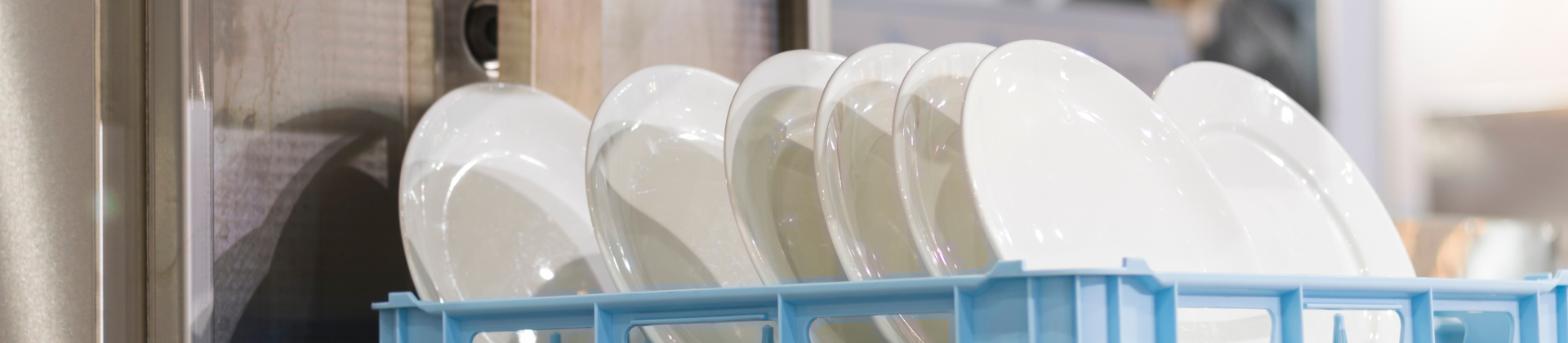
Glasswasher, dishwasher or potwasher: which does your kitchen need?
The quick answer: a glasswasher cleans glassware fast on a short, gentle cycle; a dishwasher handles plates, cutlery and crockery; and a potwasher takes large pots, pans and trays. Which you need comes down to what you wash and how much of it. A bar wants a glasswasher, a cafe or restaurant wants a dishwasher, and a high-volume kitchen with lots of pans wants a potwasher, and plenty of businesses need more than one. This guide explains the differences and helps you match the right warewasher to your kitchen.
What’s the difference?
Glasswashers, dishwashers and potwashers look similar but are built for different jobs. The table sets them side by side.
| Glasswasher | Dishwasher | Potwasher | |
|---|---|---|---|
| Washes | Glasses and glassware | Plates, cutlery, crockery | Pots, pans, trays, utensils |
| Cycle | Short and gentle | Standard | Longer, heavy-duty |
| Rack size | Small, glass-height | Standard plate racks | Large, deep baskets |
| Best for | Bars, pubs | Cafes, restaurants | Busy kitchens with heavy items |
The main differences are cycle and capacity. A glasswasher runs a quick, gentle cycle that protects glassware and keeps a busy bar moving, while a dishwasher runs a standard cycle sized for plates and cutlery. A potwasher is bigger and tougher, with deep baskets and a longer cycle built to shift baked-on residue from pots and trays.
Which do you need, by business?
Matching the machine to your setting is usually straightforward.
A bar or pub needs a glasswasher. Glassware turnover is high, speed matters, and the gentle cycle keeps glasses clear and unspotted.
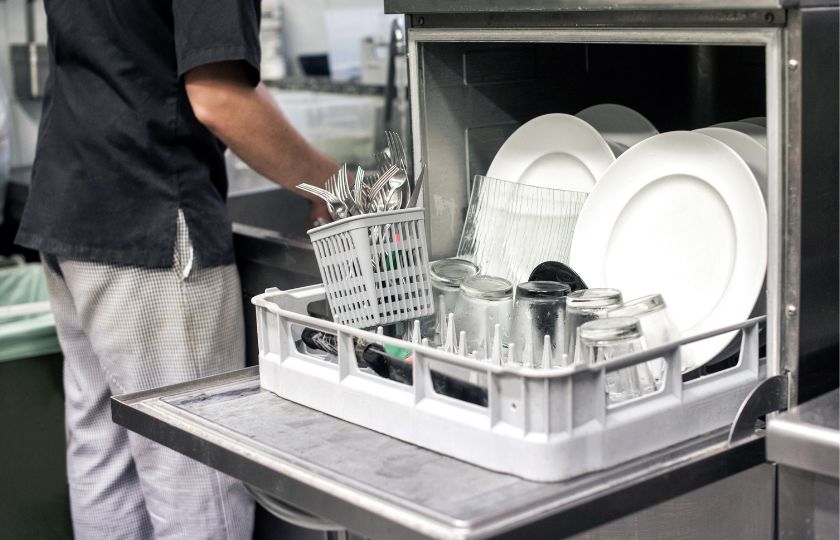
A cafe or restaurant needs a dishwasher for the plates, cutlery and crockery that come back from every table. It is the workhorse of front-of-house service.
A busy kitchen that turns out a lot of pots, pans and trays needs a potwasher to take the heavy items a standard dishwasher struggles with.
Many businesses need more than one. A restaurant with a bar will want both a glasswasher and a dishwasher, and a high-volume kitchen may add a potwasher on top. The question is not always which one, but which combination.
Which do you need, by business?
Matching the machine to your setting is usually straightforward.
A bar or pub needs a glasswasher. Glassware turnover is high, speed matters, and the gentle cycle keeps glasses clear and unspotted.
A cafe or restaurant needs a dishwasher for the plates, cutlery and crockery that come back from every table. It is the workhorse of front-of-house service.
A busy kitchen that turns out a lot of pots, pans and trays needs a potwasher to take the heavy items a standard dishwasher struggles with.
Many businesses need more than one. A restaurant with a bar will want both a glasswasher and a dishwasher, and a high-volume kitchen may add a potwasher on top. The question is not always which one, but which combination.
Undercounter, hood or conveyor?
As well as the type, warewashers come in different formats for different throughput.
An undercounter machine fits beneath the counter and suits bars, cafes and smaller kitchens where space is tight. A hood or pass-through machine has a lift-up hood and clears racks faster, which suits busier restaurants and larger kitchens. A conveyor machine moves racks through automatically for the highest volumes, such as large catering operations. Match the format to how much you wash at your busiest, and to the space and plumbing you have.
Hygiene, temperature and results
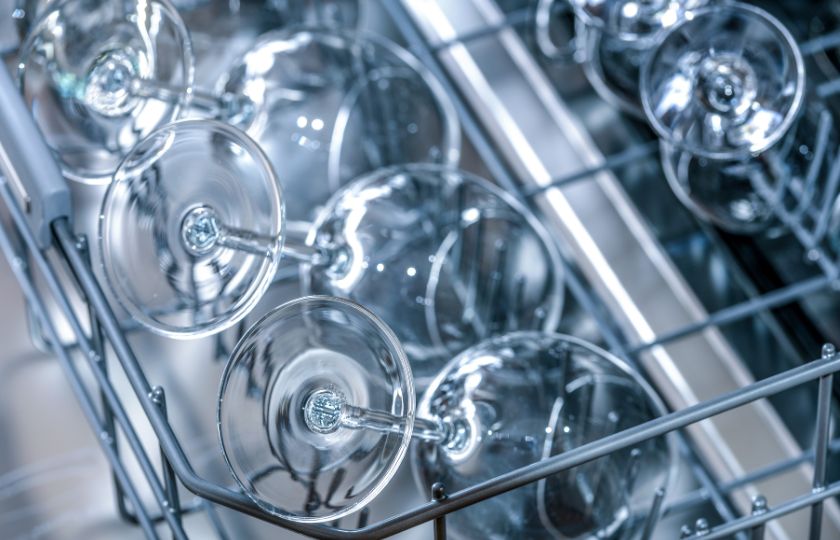
Commercial warewashers are built to clean and to finish glasses and crockery to a high standard, with a hot rinse that helps them dry clear without hand-polishing. Glasswashers run cooler to protect glass, while dishwashers and potwashers run hotter to cut through grease and food residue. Good results also depend on water quality, so in a hard water area a water softener or filter protects both the finish and the machine. Well-maintained machines give consistent results, which is why regular servicing matters as much as the machine you choose.
Hygiene, temperature and results
Commercial warewashers are built to clean and to finish glasses and crockery to a high standard, with a hot rinse that helps them dry clear without hand-polishing. Glasswashers run cooler to protect glass, while dishwashers and potwashers run hotter to cut through grease and food residue. Good results also depend on water quality, so in a hard water area a water softener or filter protects both the finish and the machine. Well-maintained machines give consistent results, which is why regular servicing matters as much as the machine you choose.
How to size your warewashing
Choosing the type is the first step; sizing it to your throughput is the second, and the one that decides whether the section keeps up at the peak. Warewashers are rated by how many racks they clear an hour, so the sizing question is really how many racks of glasses, plates or pans you turn over when you are busiest.
Start with your peak service rather than a daily average. A bar on a Friday night, a restaurant at the height of dinner or a cafe through the breakfast rush sets the demand the machine has to meet, and a machine that just about copes on a quiet day will fall behind when it matters.
Cycle time is the lever. An undercounter machine running a two to three minute cycle suits steady demand, while a hood or pass-through machine clears racks in around a minute and is built for volume. For the highest throughput, a conveyor machine moves racks through continuously, which suits large kitchens and catering operations.
Space and services shape the choice alongside throughput. Check the room you have, the power supply and the plumbing and drainage, because a fast machine is no use if it will not fit or cannot be plumbed in where you need it. Water hardness matters too, since a softener protects both the finish on your glassware and the machine itself.
If your busiest service is likely to grow, size up rather than replacing the machine a year later. It is easier to run a slightly larger machine below its limit than to nurse a small one past it.
Renting your warewashing
Buying warewashing outright ties up capital and leaves servicing and repairs to you. Renting spreads the cost into a fixed regular payment and includes the maintenance, which matters for machines that run all day. With Rental+ there is no upfront capital outlay, servicing and breakdown cover are part of every plan, and the fix-or-replace guarantee means a machine that cannot be repaired is replaced. Browse the ranges on our undercounter glasswashers, undercounter dishwashers and pot washers pages, read our guide to commercial dishwashers for more detail, and see the rent-or-buy trade-offs in our guide to renting vs buying commercial kitchen equipment.
Frequently Asked Questions
Ready to sort your warewashing?
Tell us what you wash and how much, and we will recommend the right machines and a plan. Request a quote for a tailored figure, build a quote in the basket for an indicative cost with no payment taken, or request a brochure to share with your team.