

Rent Commercial Range Ovens
We supply an extensive collection of commercial range ovens to rent, including 2, 4 6 and 8 burner ovens. We supply range ovens from some of the most trusted names in the catering industry including Falcon, Lincat, Parry, and Blue Seal. Whether you’re looking for a compact setup or a larger unit to accommodate your cooking requirements, we have the perfect range oven for you.
Our affordable, payment options are here to help you manage your budget efficiently and include service and maintenance. For expert guidance or if you’re searching for a specific model not listed, reach out to our sales team today
Get a rental quote today by adding your desired equipment to your basket and submitting your request.


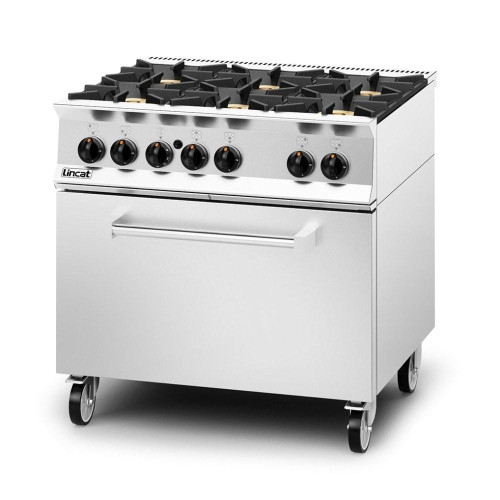


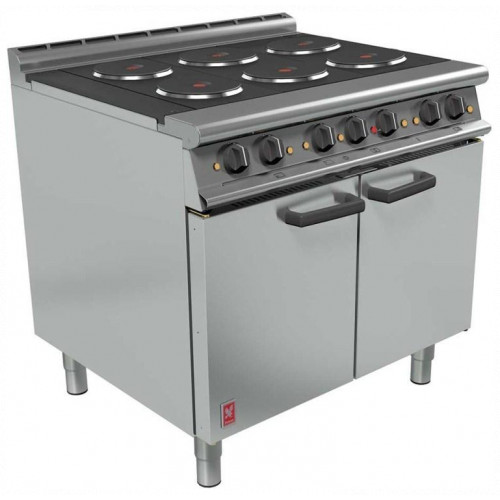

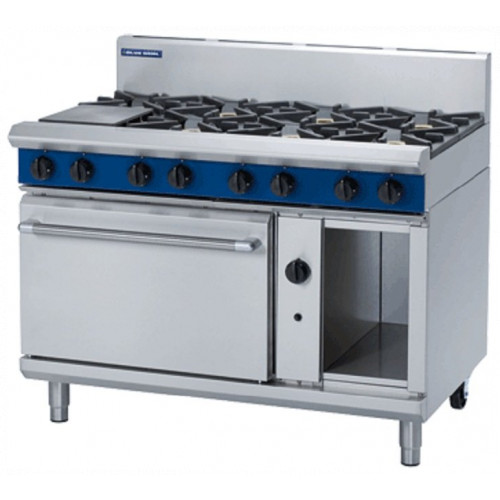


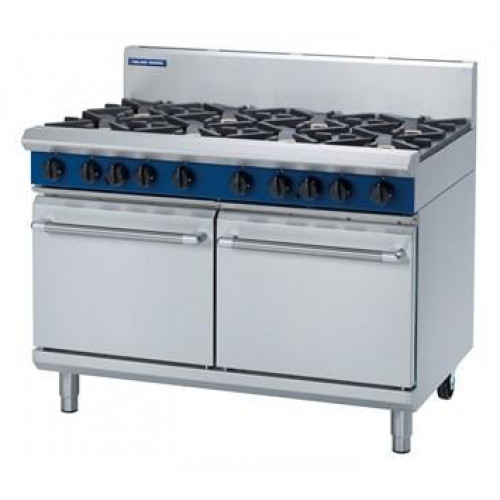
2, 4, 6 and 8 burner range ovens
Burner count is the first decision, and the one most often got wrong. Size it on your busiest service.
Two burners suit a short menu in a small space: a café doing soup and eggs, a bar with a snack offer, a satellite kitchen that finishes rather than cooks.
Four burners is the standard for a mid-size restaurant, a gastropub or a care home. One chef reaches everything: sauce, pasta water, a pan working, a ring spare, the oven beneath carrying trays.
Six burners is where a kitchen with sections begins. Two chefs work the top at once without reaching across each other, and a stockpot sits all day without stealing a ring.
Eight burners is a production top: banqueting, contract catering, hotels plating several hundred covers. It usually arrives as two four-burner sections in a run rather than one cabinet, worth knowing before you measure the wall.
How to choose between forty models
With that settled, four things separate one model from the next: hob type, the oven beneath, fuel and width.
Hob type. An open burner is flame under a pan: quick to respond and the default for most chefs. A solid top is one cast plate over the heat, hottest at the centre and cooler at the edge, so it holds a dozen pans at a dozen temperatures at once, though it is slower to heat and burns more gas. A griddle plate in place of burners gives a flat surface for breakfast and steaks. Round-top and square-hob variants both appear above.
The oven beneath. Static ovens heat by radiation and natural circulation, which suits roasting and braising. Convection adds a fan for faster, more even cooking across every shelf. Right-hand door models exist for a reason, so check the hinge before ordering.
Width and footprint. Ranges are built to module widths, and every family runs to its own footprint: Lincat Silverlink 600, Lincat Opus 800 and Falcon F900 all appear above. Match width and depth to your kitchen run. Falcon Dominator is heavy duty for continuous service; Blue Seal and Parry cover similar ground.
Gas, electric or dual fuel
A commercial gas range oven gives instant response and visible control, which is why gas is still the default. Electric suits a site with no gas supply.
Dual fuel is the combination worth understanding: gas burners on top, electric oven underneath. Chefs keep the flame response they want on the hob, and the oven holds temperature more evenly than a gas cavity. On a menu with real oven work it is often the better specification.
Commercial gas equipment must be installed by a Gas Safe registered engineer. Confirm supply and extraction before you specify.
Free-standing, suites and getting the size right
A free-standing range on castors can be pulled out to clean behind and moved when the kitchen changes. A suite gives a continuous surface with no gaps to trap spillage, but it fixes your layout. Settled kitchen and menu: build it in. Either still moving: stay free-standing.
And do not specify small. The range is the backbone of the kitchen, so when it is undersized the whole service bends around that limit. Chefs wait for rings and pans come off early. The cost is never the machine, it is every service afterwards.
Range oven, convection oven or combi?
The range does hob and oven in one footprint. What sits beside it depends on the menu: a commercial convection oven for trays of roasts and bakery work, a combi oven for steam and moisture control. Our full commercial ovens range covers all three.
What a Rental+ plan covers
Rent an oven from Rental+ and inclusive service & maintenance comes with it at no extra cost: call-outs, services, parts and Planned Preventive Maintenance. If a machine cannot be fixed, we replace it. Multi-year rental is paid by weekly direct debit, with no upfront capital expenditure, and one plan can cover several sites. Getting started runs a soft credit check, then a security deposit and direct debit, then delivery. Forty-six years and a nationwide engineer network sit behind it.
See our inclusive service & maintenance or Rental+ plans explained, build an indicative figure in the basket with no payment taken, or request a quote.
FAQs
Common Questions
Can I rent a single range oven on its own?
Yes. A plan can be one machine or a whole kitchen, on multi-year rental paid by weekly direct debit with no upfront capital expenditure. Equipment can be added or upgraded as the business changes.
What is the difference between a domestic range and a commercial one?
Build, duty cycle and certification. A commercial range cooker uses heavier gauge steel, runs far higher burner outputs, and is built to run from nine in the morning to midnight. A domestic gas stove and oven is not certified for commercial catering use, and fitting one in a professional kitchen causes problems with your insurance and your gas certification.
Is servicing included in the rental?
Yes. Call-outs, services, parts and Planned Preventive Maintenance are included at no extra cost, backed by a nationwide network of engineers. If equipment cannot be repaired, it is replaced. On a range, that covers burners, thermocouples, thermostats and door seals.